A Lingering Goodbye

by Donna Poole

Summer didn’t behave herself this year here in Michigan. First, she cried a deluge until she ran out of tears, even forced ones, and then she decided to blast us with heat and mugginess. Some of us found it hard to remember to be grateful and remarked if we’d wanted to live in Florida we would have moved south. She followed that with one of the worst droughts we’ve had in years. Summer’s extreme moodiness made it difficult to enjoy her company. We kept looking at our watches, tapping our feet, and wondering if it was past time for her to leave. Apparently, she noticed and decided she didn’t want to leave us with bad memories. Her final few weeks with us were the summer of dreams, beautiful, warm, clear, and comfortable. The humidity was low.

During one of those lovely weeks our son John and his wife Katie took their eight, soon-to-be-nine, children on vacation. We prayed for good weather for them, but we didn’t expect anything like the beautiful days they had. We wanted them to have a fantastic vacation because it was the first they had taken away from home since their first two were very small. They rented a vacation home up north in Michigan with woods behind them and sparkling Lake Michigan down below. Ninety steps below! Playing on the beach and in the clear blue water, rock hunting, roasting marshmallows and hot dogs, throwing footballs, working on a teepee in the woods, looking for sea glass—it was a dream vacation for the kids. One of the littles had so much fun feeding the “eagles” (seagulls).

And books! All eight of them love books, even the ones who can’t read yet, so there was time for reading. But the time came for them to say goodbye, pack up, and go home to the little house and the life they love, and summer finally finished saying her lingering goodbye too.

And then fall arrived. She said, “You think that was beautiful, just see what I’m going to give you!” And so far, she’s kept her promise. Early autumn has been amazing, the weather that is. I just wish I’d been able to enjoy it more. I’ve spent most of it sleeping and trying to survive.

My cancer treatment, the same one I’ve been on for four years and four months, threw me a curve ball that knocked me down for the count. Forgive the mixed metaphor. I’m not going to give you my long list of complaints; I will tell you that for a few weeks even Tylenol and Ibuprofen together didn’t touch the pain. The extreme exhaustion was a blessing; when I slept, I didn’t have to feel anything. And I didn’t have to wonder about the future. I didn’t have to ask myself if I too am saying a lingering goodbye. I’ve had to have more frequent scans since January because they’ve been questionable. After my July scans my oncology team decided I needed a biopsy and my pulmonologist agreed. When they weren’t able to do the biopsy, they decided to repeat one of the scans in three months instead. That’s happening in a few days.

Scans have been part of my life for over five years. They aren’t my favorite thing, and I watch my patient portal closely for results, but they never terrify me. Why not? Even if I am getting closer to the end of my lingering goodbye here, I know I’m getting closer to an eternal sunrise. Here’s how I know. Long ago, when I was just a little girl, I heard, much to my shock, that I wasn’t going to heaven just because my parents were or because I went to Sunday school and church every week.

I could have jumped right out of my little chair when the children’s church teacher made it clear to I was responsible for my own eternal destiny. I felt like covering my ears. My destiny better not involve me being good; I was famous even at seven for being the opposite.

Lucky for me (and you) getting to heaven didn’t require me to behave better. No one can be perfect, and that’s what heaven requires. Jesus lived the perfect life we can’t. I thought I knew all about Jesus. He’s God the Son, born in a manger at Christmas time. He died on a cross, rose from the dead, and went back to heaven. But what did that have to do with a naughty seven-year-old girl who really didn’t want to try to be good?

Mrs. Green, the teacher, explained in a way I understand what Jesus did on the cross. He took into his heart all the sins everyone had ever done or ever will do and felt the guilt of them all. He not only died himself on the cross, he killed those sins, made them to no longer exist. If I knew I was a sinner and wanted him to forgive me, he would make me clean. There would be no sin to keep me from God the Father who loved me so much. Not only would I go to heaven when I died, God himself would live with me all my life. It didn’t take me long to make that exchange when we prayed: I quietly asked him to save me, take away my sin, and give me heaven!

So, do you think I instantly became a little angel who never again did anything wrong? God put a verse in the Bible especially for people like me who have trouble being good, “If we confess our sins, he is faithful and just to forgive our sins, and to cleanse us from all unrighteousness.” –I John 1:9

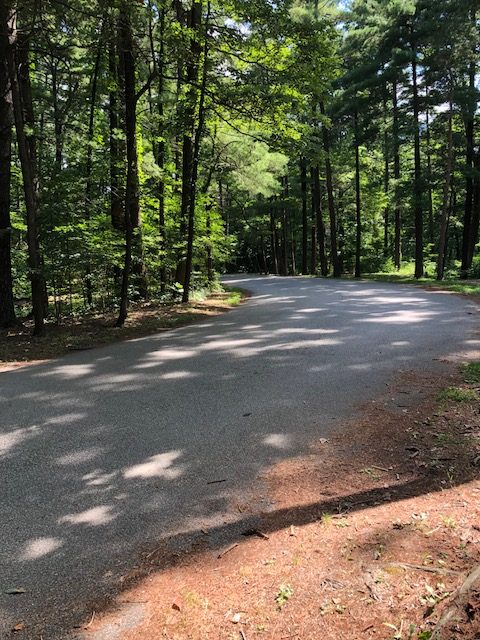
But my life changed that day. Life here became sweeter than ever; I’ve always loved life. But I started to listen for a song I’d never heard, watch for a country road I’d never walked, search for the perfume of a flower not of this earth. Eternity was calling my name, sometimes when I was swinging at twilight, sometimes when the slant of the sun caught my heart with its beauty, or sometimes right before I fell asleep at night. I’ve always known a better world was coming. I felt it in my heart, and the Bible promised it.

And even heaven, as wonderful as that will be when all the children are sitting at the Big Table and the love of the Father warms us all, is only the beginning of our eternity. We who know Jesus have no idea of the unimaginable happiness waiting for us.

“He keeps His good wine until last. His gifts grow deeper, richer, fuller, right through the eternal years.” –John Henry Jowett

The Bible only gives us a hint about eternity. It may hold far more than we imagine.

“The resurrection of the saints is not the last thing, it is the beginning. Do not limit God and humanity by the end of this age, or by the millennium. Everything so far has been preparatory. Stretching away beyond me, I dream dreams of unborn ages and new creations, and marvelous processions out of the being of God, but through them all, the risen Christ and the risen saints will be the central revelations of holiness and of life.” –G. Campbell Morgan

In eterntiy the weather won’t have any temper tantrums, and neither will we. We’ll be happier than the happiest of children on the best of vacations. I don’t think there will be ninety steps, and if there are, we’ll have boundless energy to run up and down them! There won’t be the lingering goodbyes we’re all saying here, only one long, eternal hello, and love that lasts forever. Not many more sunsets and it will be time to go Home. I hope I see you there!

The end

***

These blogs are now available in book form on Amazon:

Backroad Ramblings Volume One: Stories of Faith, Love, and Laughter

Backroad Ramblings Volume Two: Stories of Faith, Love, and Laughter

Backroad Ramblings Volume Three: Stories of Faith, Love, and Laughter

Backroad Ramblings Volume Four: Stories of Faith, Love, and Laughter

A Letter from Beyond the Rainbow–a Fiction Story

by Donna Poole

Greetings from the land beyond the rainbow to all who know me, and especially to my own dear people! I have many names, TT, Sweet T, and Getdownoffthatcounter, but my real name is Theon Greyjoy Kiefer. I have hazy memories of being held and loved by my people who cried as they told me goodbye a few earth days ago. Then I slipped softly away from them so quickly I hardly noticed my own passing.

I’d heard stories about the rainbow bridge ever since I’d been a kitten, and perhaps there is one for others to cross. I’m no expert on these things. I suppose dying is different for every creature. I can only tell you what happened to me, and where I am now.

We call this beautiful planet Anki. I don’t know how far from earth we are, nor how long it takes to get here. It seems it took only a millisecond to leave the arms of one who loved me and wake here. The first thing I saw was a rainbow, and somehow, I knew I was on the other side of it. I don’t recall crossing any bridge. I could see all the rainbow colors, not just the blues and greens I’d been able to see on earth. Here, cats can see all the colors, even some you humans don’t know exist. I lay there in the softest grass I’d ever felt and looked at the other side of the rainbow. Its colors were violet, indigo, blue, green, yellow, orange, and red, in the exact opposite order of earth rainbows. It never fades, not even at night.

Even though my people were gone I didn’t feel lonely. I felt surrounded and comforted by love. The sun seemed closer than earth’s sun, but I wasn’t too warm. I felt cold on earth for a while. My long, furry coat helped, but quickly going from 10.7 pounds to 8.2 pounds is enough to make any cat shiver. My coat grew dull, and some of it fell out. My people coaxed me to eat, and I tried, for them, but it was hard. Somehow, I knew it was time to stop eating, time to get ready for my journey to Anki. And I’d been tired on earth, so tired.

My people were worried, and soon we were in the car on our way to the vet. My mom person held me a lot at the vets, and that comforted me. I was only half awake, but I heard the vet say “cancer,” and “suffering,” and I heard my people cry. Then the vet gave me the traveling shot that sent me here, and I died in my dad person’s arms. My last earth sound was the sound of his heart breaking. My mom person’s heart broke too; she loves so deeply.   

I never once doubted I was loved during the almost ten years I lived with my mom and dad person, and the old ones. The old ones were there too when I passed from earth to Anki. They cried too, and so did the sweet vet who took care of me all my earth life. I hope they all get to read this letter and know I felt their love. They made a difference in the life of this lonely shelter cat, and I think I made a difference in their lives too.

I spent my first day and night here on Ankin sleeping, just waking for brief, joyful moments. Dying is hard work, and I felt tired. When I woke at night the stars looked close enough to catch between my paws, and a low, orange sliver of a moon hung in the sky. Tree frogs and crickets sang me a lullaby; an owl hooted, and off in the distance, coyotes howled.

That’s when I first noticed the difference. I wasn’t at all afraid! The animal kingdom on earth is always alert, always on guard, but in Anki, I knew I was safe. Next, I noticed the sounds. Have you ever observed all nature sings in a minor key on earth? On Anki, the lullaby the night creatures sang me, the hoot of the owl, and the howls of the coyotes were in a major key, a sound of pure joy. I fell back asleep smiling and thinking, I wish I’d known on earth there was such an animal kingdom as Anki waiting for me.

When I awoke the next morning, I heard birds calling to each other in song. They, too, sang in a major key. Next to me a lion woke up, yawned, and shook his mane. His eyes were blurry from sleep and a butterfly perched on his nose. I laughed. Somehow, I wasn’t afraid of him. A family of field mice scurried at my feet, eating tiny, white, round things. The lion began to lick the round things up too.

“Mana?” I asked the lion. “Mana?”

He roared with laughter. “It never ceases to amaze me how the new children born on Anki instinctively know the universal language. Yes, child. Mana. Mana means what is it? It’s food for the day. Eat, and gather as much as you like.”

He and I ate, side by side. The food was delicious. It tasted like wafers made with wild honey.

A hummingbird paused in flight long enough to whisper in my ear, “Are you happy here?” I nodded. “Good,” the creature said, “everyone is.”

Just when I’d finished eating, a sweet, solemn silence fell over the land, and I heard the rustle of someone walking through the grass. No one had to tell me it was the Son of Man.

He touched a bluebird who’d somehow broken a wing, and it flew to his shoulder. He cradled a field mouse with a long scratch, and the scratch disappeared. He came to me and scooped me into his arms and held me close to his heart.

“Sweet T,” he said, “rest, play, and be happy until I make all things new. When I make the new heavens and earth, your people will once again care for you. Until then, you’ll be safe here, on Anki, my animal kingdom.”

I could feel my strength returning. I didn’t need a scale to tell me I’d gained back the weight I’d lost or a mirror to show me my coat was soft and shining again.

So, my dear people, I know you’re sad because you miss me. I know you wish you could have done more to help me, but you did all you could. No one can do more than that. It was my time to go. There are many more wonderful things about Anki, but I’m not allowed to say more, and even if I was, I have to go now.

The lion is challenging me to race. Silly cat. Who does he think he’s messing with? I’m Theon Greyjoy Kiefer, alpha cat on earth, and happiest cat on Anki. Tell the other cats, Cass, Lily, and Mr. Lou they can have the food I left behind. Tell them I’ll wait for them here, and they’re going to love the mana. I hope you all know I love you and I miss you. You won’t hear from me again; I’m only allowed to send one letter from beyond the rainbow.

Thank you for taking such wonderful care of me. This isn’t goodbye. It’s see you later. Theon

P.S. I’m not sorry I got on the counter.

The end

***

These blogs are now available in book form on Amazon:

Backroad Ramblings Volume One: Stories of Faith, Love, and Laughter

Backroad Ramblings Volume Two: Stories of Faith, Love, and Laughter

Backroad Ramblings Volume Three: Stories of Faith, Love, and Laughter

Backroad Ramblings Volume Four: Stories of Faith, Love, and Laughter

Photo by: Kimmee Kiefer

The Doubly Perfect Birthday

by Donna Poole

I read somewhere seven is the number of perfection and somewhere is always correct.

I don’t remember any details of turning seven, but I know it was fantastic. At seven, I loved summer days, jumping rope, playing marbles, and hopscotch.  I loved taking crazy risks like strapping on my metal skates and almost killing myself and anyone else brave enough to step on the sidewalk with me. I loved sitting on the rickety back porch in the rain with my sister and playing with pieces of dough Mom gave us until it turned black. Someone, probably a neighbor, had a pogo stick, and that was hilarious, out of control fun. I never knew where I might go on the next jump, perhaps Italy or the moon. I didn’t have a bike until I was sixteen, but I didn’t feel deprived. Summer days are full of fun and dreams when you’re seven. They have to be; seven is the age of perfection, and nothing can beat perfection.

Nothing can beat perfection except double perfection. I turned seventy-seven this week. I told my family I expect to be so perfect this year I’ll be sickening. I’m going to be so perfect I doubt I’ll be able to stand myself, but I have no choice. I’m double sevens this year.  

I had a lovely birthday! It began with so many phone calls I wasn’t even able to brush my teeth until lunch time, and I had to forgo my morning shower and smell a bit gamey all day. I know you’re used to me slightly exaggerating, but that’s gospel truth. One distressed friend couldn’t get through to talk to me; her calls kept going to voice mail, and she finally left a lovely if somewhat off-key rendition of happy birthday there. Another friend left a birthday song in a text message, and I was amazed. I didn’t even know you could do that. And three of my grandkids sang and shouted happy birthday aided by their parents.

Back to lunch. Our daughter Kimmee, who lives with us, told us to stay out of the kitchen while she cooked. I tried unsuccessfully to guess the meal by the enticing scent wafting through the house. She made delicious feta baked pasta!

Mid-afternoon John and I left for a park near us. We sat near the lake in a quiet spot we love and pulled out our reading material. The sun sparkled off the water and the green trees reflected in their depths. Just so we wouldn’t think we were in heaven, noisy work trucks joined us and spent the rest of the afternoon with us, but we didn’t care. I was flying high with an attitude transcending my circumstances; remember, I’m doubly perfect now. But I can’t say I had a good attitude about the nineteen spam phone calls! I don’t think even John, the apostle of love, could have suffered that many fools gladly on his birthday!

But, to a certain extent, life is what you make it. John and I read, talked, and laughed. And I tried to keep up with the hundreds of birthday texts and Facebook messages. We’re blessed with wonderful family and friends.

As the sun sank lower in the sky, we kept thinking the noisy work trucks would leave, but they did not. One exhausted looking worker said to us, “I can’t wait until this day is over.”

I’ve felt that way sometimes, but I didn’t that day. It was my birthday, and I was double sevens! It was my first day of being so perfect my family and friends could barely stand to be near me. Also, I hadn’t taken a shower, remember, so there was that too.

We headed home before the noisy trucks left, and when we got to our country home and blessed quietness, our daughter and son-in-law had a surprise for us. They’d made crème brulee, and one had a candle in it. They sang to me, and then we ate the creamy deliciousness.

“Close your eyes and hold out your hands, both of you,” they said to us.

We obeyed, and they gave us a rolled piece of paper tied with a ribbon. What a fantastic surprise!

It said, “Mom and Dad, you always say life is short; make memories. So, let’s go make some together. Happy anniversary and birthdays to you both. We love you guys immensely, and we can’t wait for December 16! We’ll have so much fun. Let’s make an evening of it. Love, Kimmee and Drew.”

Two red arrows marked the place where the four of us will be sitting for the Mannheim Steamroller Christmas Concert!

Words tumbled over each other as the four of us talked about visiting Horricks before the concert, getting cookies afterward, and dressing up in Christmas sweaters.

“Please, don’t agree to preach any funerals that day,” I said to John, and we laughed. “And even if they change my cancer treatment, I’m not going to U of M that day, no matter what!” And then we didn’t laugh. There was just the slightest pause in the conversation. I blinked back a few tears and didn’t look at Kimmee for a second. It was no time to cry.

You see, since January my three-month scans have been coming back questionable, and my poor family, church family, and a few friends have been on a roller coaster ride with me. I was supposed to have a lung biopsy earlier this summer to see whether or not Morticia is flexing her muscles, but U of M determined there was no safe way to access the place in my lung lighting up on the PET scan.

Is the cancer I’ve been fighting for five years once again growing? If so, what options will be available? I’m not a candidate for Car-T or stem cell transplant. I’m already in a clinical trial because traditional treatments of chemotherapy and radiation didn’t work. A recent diagnosis of cardiomyopathy and mild heart failure caused by earlier chemo further limits my options. My oncologist says there will be something. But what? And now what?

Now I wait for the next scan in early October. The larger area in my upper lung and the two smaller areas in my lower lung can disappear, or they can continue to grow.

Human nature wants answers yesterday. So, I can lie awake nights and talk to Dr. Google, or I can remember that the God I had when I was seven is the God I have when I’m seventy-seven.

When I was seven, I had a fascination with speed. I wanted to fly, not in a plane, just by myself. I begged Dad to let me put on my skates and pull me behind the car and was not happy when he refused. I decided to strap on the metal skates and fly down the steepest hill in the area. My younger sister with an older, wiser brain, told me not to do it. I told her I’d be fine. I wasn’t. When I landed in a bruised and bloody heap near the bottom of the hill, I didn’t blame God for not sending an angel to protect me. And, even as sore as I was, I thought, what a ride!

By the time I was seven, even though I was a crazy kid who felt invincible, I knew some important things. I knew life on earth doesn’t last forever. I knew everyone was a sinner, and sinners can’t go to heaven. I knew that’s why Jesus had left heaven and come to earth to die on the cross. Because I’d trusted him as my Savior, I knew I was going to live forever in heaven. Sometimes I’d lie on my back in the grass, watch the clouds sail by, and wonder what heaven would look like. No one had to tell me it was going to be even more joyful than being seven, I knew it. How could it not be? Jesus was there! And Jesus was with me too, forever.

So, now I’m seventy-seven. Sometimes life has been tough, especially in the last five years. But I don’t blame God for not sending an angel to rescue me. We live on a beautiful but broken planet, and bad things happen. The clouds still sail by in the sky reminding me of heaven. Jesus is still with me, and I love him more than ever. Friends and family still sing happy birthday to me. If I tried to hop on a pogo stick now, I probably would end up in Italy or on the moon, but I’m guessing I’d still say, what a ride!

How tough is life? I usually need a nap to recover from a shower. Perhaps because I’m so doubly perfect now at age seventy-seven I’ll quit taking them!

So, life isn’t easy for me; it’s worse for many. I’m going to keep living, loving, and laughing. Lord willing, and if the creek don’t rise, we’re going to Sight and Sound in Pennsylvania this month, an awesome gift from a son and daughter-in-law. Then we’ll have a wonderful few days of a sister reunion. Lord willing, and if the creek don’t rise, we’re going to sit surrounded by lights and music at the Mannheim Steamroller in December. I asked if I could wave a white hankie. Kimmee says no. I asked if I could wave my phone light. She says only if they tell me to.

Hey! I’m still the kid who whizzed down the hill on metal skates. There’s no telling what I might do next. I confess I still have an urge to fly, not in a plane, but by myself. And I will someday, when God calls me Home. Because of Jesus, I’m going to fly right out of this withering, pain filled body into one perfect and a lot younger. I wonder how old I’ll be? I wouldn’t mind being seven again.

The end

***

These blogs are now available in book form on Amazon:

Backroad Ramblings Volume One: Stories of Faith, Love, and Laughter

Backroad Ramblings Volume Two: Stories of Faith, Love, and Laughter

Backroad Ramblings Volume Three: Stories of Faith, Love, and Laughter

Backroad Ramblings Volume Four: Stories of Faith, Love, and Laughter

Once Upon a Sunday-a Mostly True Tale

by Donna Poole

Pick a pew and sit a spell. Any pew will do since it’s just you and me here, though you might hear me better if you come close to the front. I have the soft voice of an old man, and I’ve earned it. I’m an old country church, and I’ve sat on the corner of these two dirt roads for more years than I can remember. I could tell you hundreds of stories that would make you laugh and cry, but I’ll tell you just one today, the tale of Once upon a Sunday, last Sunday to be exact.

So you’ll understand, I’ll have to give you a bit of background. You stop me if I get to rambling, now, you hear? We old churches do that when we’ve a story to tell. I won’t go back to my beginnings; that might take more time than you have years left on this green earth! I’ll just start back fifty years or so. While I talk, you look out that window, and watch the corn grow tall.

Fifty years ago, I was a tiny building, even smaller than I am now, six half pews on each side, and no indoor bathroom. But people came and filled the pews until they needed more room, and they added onto me, bit by bit. Even got fancy enough for one indoor bathroom, then two. Next came a few Sunday school rooms. For years the young pastor, and his young wife, and the people dreamed of building a fellowship hall, but there was no money, and they agreed they wouldn’t borrow any.

As you can tell sitting here, I’m still not a big church, though I’m a lot larger than I once was. I’m still what I was made to be, a plain white church on the corner of two dirt roads. I can’t offer all the programs big churches can. People who come here get simple preaching without many frills, but they also get love, laughter, and prayer. These people can pray! And they prayed for a fellowship hall for many, many years.

How many years, you ask? Enough years that the young pastor and his wife grew old. But then, one wonderful day, they had groundbreaking Sunday and began building the fellowship hall that’s attached to me now. You’ll have to go look at it when I finish my story. Don’t get fidgety now, it’s a good story, and I’m getting to it! It took some time for the building to go up, but God provided that money in miraculous ways and it didn’t all come from the small congregation who sits in my pews on Sundays.

The fellowship hall is a wonderful place now, though it’s still not done. It has two bathrooms, some Sunday school rooms, a large open area, and a kitchen. The kitchen doesn’t have a stove, sink, or running water yet. Floors still need to be finished. I won’t bore you with the list of work still needed, but like I said, it will happen as the money comes in.

Not long ago the old pastor’s wife was walking out to her car through the fellowship hall with Reece, her tall, young grandson. Handsome too, or so she says. You know grandmas!

“This fellowship hall will get finished,” she told him. “Maybe even in my lifetime! And the money doesn’t have to come from people in this church. Do you know that song, “He owns the cattle on a thousand hills, The wealth in every mine; He owns the rivers and the rocks and rills, The sun and stars that shine?”

Reece shook his head.

“It’s an old song, but true,” she told him. “God owns all the cattle on all the hills, and I’m asking him to sell a couple of cows and send us the money!”

They laughed, and Reece said, “I know God can send the money!”

She whispered a prayer, “Please, Lord, sell those cows! He’s so young, and his faith is so strong.”

Money trickled in, but then something unexpected happened. It always does, doesn’t it? My roof needed repair, and it was going to wipe out a lot of the building fund. I felt bad.

The pastor and wife sighed but didn’t despair. Some old friends called them soon after they got the news about the roof just to catch up on life. Like they always did, the friends asked about their health, the church, and the progress on the fellowship hall.

“We’re going to have to put the fellowship hall on hold for a bit,” the old pastor said.

“Why is that, John?” the friend asked.

He listened to the story of the buckling roof. “How much do you suppose something like that would cost?”

“They say about five thousand dollars.”

The conversation continued with love shared as it always does with those four friends.

A few days later the pastor and his wife got a note from their friends. That wasn’t unusual. They’d gotten many notes over the years and treasured each one. As they read it, a check slipped out. They looked at it with disbelief. Then came tears. And joy, so much joy—they could hardly wait for Sunday.

I should say something here. I’m just an old church, but I know things. I listen. Those friends are not rich people, far from it.

Sunday finally came. The pastor’s son led the singing. He said, “Board and business meetings aren’t my favorite, but I think we’re all going to like this business meeting.”

The pastor stood. He told the people about the need for the new roof. He said, “I was going to have to ask you to vote to take five-thousand dollars out of the building fund to pay for the roof, but now I don’t have to ask you to do that. A dear friend of mine sent a check designated for the roof. It’s for exactly five thousand dollars. Not only that but a couple who often sends money to the church sent some this week, and instead of taking money out of the building fund, we have some to put into it!”

The pastor stepped down from the pulpit. “The check was made out in my name, so I direct deposited it into the church account. Here’s the receipt.”

He handed it to the treasurer. The treasurer handed him the hymn book. “Can we sing this song?”

The pastor’s son led the congregation in, “God is is so good… He answers prayer.”

And the people in this old church said, “Praise God,” and “Amen!” and “Hallelujah!”

The old pastor’s wife couldn’t say anything though. She was crying.

It was a good, good, day. Sometimes it’s a blessing to be a small church on the corner of two dirt roads. Five thousand dollars wouldn’t mean much to a big church in town. I know. I’m just a country church, but I hear things. But to those of us here it meant everything.

Praise God indeed!

That night the old pastor was almost sleeping when his wife woke him. She has a very bad habit of doing that.

“Honey,” she said. “Our dear, dear friends. How I pray God will bless them for giving that money. But I didn’t even know they had any cows!”

“Huh?” he muttered.

“Never mind, go back to sleep.”

And he did. But she stayed awake for a while, talking to God. Sometimes, you’re just too happy to sleep, and that happened once upon a Sunday while outside the windows the corn grew tall.

You’ve been a great listener. You should go now and look at the fellowship hall God is building. And when you walk through it, remember to say, “Praise God,” and “Amen!” and “Hallelujah!”

The end

***

These blogs are now available in book form on Amazon:

Backroad Ramblings Volume One: Stories of Faith, Love, and Laughter

Backroad Ramblings Volume Two: Stories of Faith, Love, and Laughter

Backroad Ramblings Volume Three: Stories of Faith, Love, and Laughter

Backroad Ramblings Volume Four: Stories of Faith, Love, and Laughter

Celebrate Me Home

by Donna Poole

Diane couldn’t remember the last time she’d had a visitor, but she was okay with that. If you never marry, live to be ninety-six years old, and outlive all your friends and family, who exactly is going to come see you in some dismal nursing home tucked away in the middle of nowhere? No one, that’s who. And there were plenty of others like her there who hadn’t seen a visitor in weeks, or months, sometimes in years.

So, for the ten years she’d been a resident of Buckingham Palace, as she’d named it, she’d adopted the old Victorian practice of calling hours. Unlike the Victorian ladies, she didn’t go calling from 3:00 to 5:00 p.m. Most of the other residents were napping in the early part of that time and being transported down to dinner at the later part of it. She went calling in the morning.

After breakfast in the dining hall the residents went back to their rooms. Unlike pricier care homes, this one had no activities to entertain its guests. Its clientele stayed mostly in their rooms or dozed, chins on chests, in the dark and somewhat odiferous hallways.

The nurses would have changed the situation if they could have, but they were too old, too few, and too overworked. Plus, there were no funds. Diane’s favorite nurse, Jenny, had told her she’d heard rumors of a state nurse who was visiting nursing homes checking on conditions. and improvements usually happened after she filed her reports. True, there was only one nurse for the whole state, but Jenny hoped every day to see her walk through the doors. Diane pictured the state nurse as some kind of miracle working angel, a beautiful woman whose smile would light up the dark rooms and whose powers would bring better living conditions, perhaps even social times for the residents to bring smiles to sad faces.

Diane prayed for that, but she also did what her mother had told her to do when she’d been a little girl.

“Diane, put feet to your prayers.”

“What does that mean, Mother?”

“It means pray and trust God; then do what you can to make things better yourself.”

Diane’s calling hours were her solution to make things better. She started preparing at 9:00 a.m. When you’re an old lady, it takes a long time to put on proper undergarments, nylons, a Sunday dress, good shoes, a hat, and white gloves. She got out of breath often during the process and had to sit down and catch her breath. But a lady doesn’t go calling dressed in less than her best, not even during a brutally hot summer in a place where the air conditioning works only when it wants to.

A splash of perfume, a dash of lipstick, and Diane was out the door, her black patent leather purse stuffed with tissues over her arm. A lady never knew when her nose might run, and if you were Diane, your nose ran a lot. Diane’s runny nose upset her more than her painful arthritis and her diagnosis of a terminal disease.

Nurse Jenny gave Diane a list of who needed visits. Some were people from the memory care hall who weren’t yet so forgetful they didn’t know they were lonely. Like any proper lady, Diane knocked on a door and waited for a “come in.”

It wasn’t long before the nurses heard laughter coming from the room Diane was visiting. She had a gift of bringing light, love, and laughter, and every morning, regardless of how she felt, she shared her gift from room to room.

“Does she have a joke book or what?” Penny, a new nurse, asked Jenny.

Jenny shook her head. “She gets them talking about their childhood, or about something funny one of their children did, or I don’t really know what. I do know she never leaves a room without telling the person Jesus loves them and died for them, and she doesn’t sound preachy. She makes a big difference in this place. We’re really going to miss her when she’s gone.”

Penny nodded. “Someone told me a doctor gave her three months to live. How long ago was that?”

Jenny couldn’t keep the grin off her face. “Five years.”

“What?”

“Yeah. No one can explain it. The doctor who comes in here says love keeps her going.”

“You think a lot of her, don’t you?”

“I love these people. I do something special for them every year to celebrate the Fourth of July. It’s happening late tonight. It’s fun, if you’d like to stay.”

Penny shook her head. “I’m sorry. I would, but we celebrate Independence Day with our grandchildren. You don’t spend any of the day with family?”

Jenny shrugged. “I’m like many of the residents here. I don’t have any family. I suppose that’s why I’ve grown so close to many of them.”

Diane smiled at the two nurses as she hurried past their desk, going as quickly as her walker would allow. She had many visits to make today. It was a special day. And unlike most days, she only went to the rooms of the more mobile, healthier patients. They needed visits too.

“Why is Diane so dressed up? She looks like she’s ready to go to church in the 1950’s,” Penny asked.

Jenny chuckled. “She’s going visiting. You’ll get used to that.”

Diane stayed only a few seconds in each room. “Tonight’s the special night! Try to stay awake if you want to come. We meet in the dining hall at 9:00.”

Penny left when the day shift ended, but Jenny stayed. It took awhile to get the dining hall party ready, decorated with patriotic streamers and little flags. She was surprised when Penny came into the room a few minutes after 8:00.

“Do you need any help?”

“I’d love it! But what about your celebration with the grandkids?”

“They all have the stomach flu!”

The two women cut up the red, white, and blue sugar free Jello, and arranged it on plates. Then they put out the cupcakes Jenny had made, gluten and sugar free, but delicious. The residents began arriving, and the two nurses went to get those who needed help getting there. They exclaimed about the decorations and the refreshments.

The show started at 10:00. The residents clapped and laughed like children as they watched the town’s fireworks display out of the windows. For many of them it was the highlight of the year. The show ended with gold stars that filled the night sky. Entirely uncoached, those looking out of the windows recited the pledge of allegiance.

Penny got the residents back to the room by herself. Jenny had missed the whole show. She’d been sitting by Diane’s bed with tears running down her face. Diane had collapsed before she’d taken her first bite of Jello, and the two nurses had gotten her back into her room and into bed. Jenny put her stethoscope on Diane’s heart one more time. There had been no heartbeat for five minutes. She’d called the doctor, but he was on another emergency, and Diane was a DNR, so there was no hurry.

“Why am I crying? She’s wanted to go to heaven for years!” Jenny spoke aloud to the empty room. No, not empty. God was there and a host of unseen angels.

She jumped when she heard a voice. “Jenny, why are you crying? I’ve had the most amazing dream! I dreamt I went to heaven and fell at the feet of Jesus. So many people were there I’ve loved. Then they celebrated my homecoming with fireworks. The last one was the most beautiful of all. Gold stars filled the entire night sky! And why are you crying?”

“I’m crying because I’m happy. Go to sleep now, Diane. I’ll tell you all about it in the morning.”

“I guess I better get to sleep. I need to go calling tomorrow morning, you know.”

“Yes, dear, I know.” Jenny bent over and kissed her on the forehead.

She was almost out the door when Diane said, “Maybe that angel will come tomorrow.”

Jenny’s heart skipped a beat. “What angel?”

“You know that beautiful state nurse who is going to make things better around here.”

“Oh, that angel. Maybe she will come. But I think we already have one angel who makes things better every day, and I’m glad we get to keep her a little longer.”

But Diane was already asleep.

The end

***

These blogs are now available in book form on Amazon:

Backroad Ramblings Volume One: Stories of Faith, Love, and Laughter

Backroad Ramblings Volume Two: Stories of Faith, Love, and Laughter

Backroad Ramblings Volume Three: Stories of Faith, Love, and Laughter

Backroad Ramblings Volume Four: Stories of Faith, Love, and Laughter

Not Anymore

by Donna Poole

There were seven little girls, the number of perfection, or so their mother thought. Six looked just like her, blonde, blue eyed curly haired beauties. But people sometimes asked if the middle child was adopted. Her hair was red and straight, and freckles splashed across her face. Her eyes were a startling green that looked right through a person.

In order of age the six blonde girls were Anna Belle, Bonnie Belle, Clara belle, Fergie belle, Gemma Belle, and Holly Belle. Holly Belle was born on Christmas. But when the little redhead middle child was born, her dad took one look at her, named her Poppy, and declared no “Belle” would be added to it.

Poppy was a daddy’s girl from the day she was born. She was the only colicky one of the seven, and poor Mom couldn’t comfort her. Exhausted from having a baby every year, she was only too happy to have Dad come home from work and lay Poppy across his chest. The baby immediately quit the high pitched screaming she’d been afflicting the house with all day, and there was peace and quiet until Dad had to return to work the next morning. When Poppy outgrew the colic, though, she had the sunniest disposition of any of the girls. If she ever wished she had blonde curls and the name Belle after Poppy, she never said so.

The Belles were happiest playing with dolls, paper dolls, or having a tea party. Poppy liked to climb trees and play catch with Dad when he came home from work. She followed him like a puppy when he weeded his garden or worked on the car, talking non-stop about a new bug she’d found or a stray cat she was trying to tame.

“You’re my boy, aren’t you Poppy?” Dad often asked.

“Yep. I will always be your boy, forever and ever.”

Every Father’s Day Poppy made her dad a card. She drew stick figures of the two of them and signed it “I love you. From your boy.”

Poppy made more laundry than any three of her sisters. She was always falling out of trees, or stomping in mud puddles, or wading in the creek. She usually had a minimum of three bandages somewhere on her body, and at least one scab on her nose or cheek.

She wore dresses to school and church because it was the 1950’s, and that’s what all the little girls did, but she changed into her jeans or shorts the minute she got home.

People described the Belles as “beautiful” and “exquisite” and said Poppy was “kind of cute.”  

Poppy loved playing with her sisters when she could coax them into going for a bike ride or swimming in the creek, but she cringed when they begged her to play princess or come to a tea party. She obliged them because she loved them, but she kept looking at the door.

Sometimes Mom would rescue her. “Let Poppy go.” Mom would laugh. “She’s a tomboy. She’s got a whole world to conquer outside.”

And then Poppy would gratefully escape. If the tea party or princess game had been too long, she’d run as fast as she could down the road, loving the feel of freedom and the wind in her hair. If it was time for Dad to come home, sometimes she’d run the whole mile and meet him at the corner so she could climb in the car and ride home with him and hear him say, “There’s my boy.”

And Poppy would lean against him and say, “I’ll be your boy forever and ever!”

It was a fun game. Poppy loved being a tom boy. She’d never be a girly girl, but she didn’t really want to be a boy. She liked being a girl. Sometimes she daydreamed about how many children she’d have when she grew up. She decided two was a respectable number. She didn’t care if they were boys or girls, but she would not name any of them Belle.

Suppertime was the best time of the day with the whole family sitting around the table. Mom always looked tired but happy. Dad made everyone laugh with his crazy stories and jokes. Sometimes Mom smiled at the girls and said, “My seven girls. Seven, the number of perfection.”

Then Dad would say, “But wouldn’t you like to try for one more?”

Mom would sigh and say, “No, I don’t think we should mess with perfection. I know you want a boy, but we might get another girl, and I’m happy with the seven we have!”

Poppy didn’t like that conversation. She swung her legs back and forth and bit her lip. “Daddy doesn’t need a boy, Mom. I’m his boy. Forever and ever.”

And then it happened. Mom told her perfect seven she was expecting a baby. She’d already picked out a name, Izzie Belle. The girls squealed with joy and hugged her. Mom managed to smile, but Poppy noticed she looked more tired than ever.

When the baby was born Anna Belle was twelve, Bonnie Belle eleven, Clara belle ten, Fergie belle eight, Gemma Belle seven, and Holly Belle six. Poppy was nine. A neighbor lady stayed with them while Dad went to the hospital to bring home Mom and their new baby sister. The seven girls squeezed together on the couch smiling and waiting to take turns holding Izzie Belle.

Dad came in the door first. “I have a big surprise for you, girls!”

They laughed. “It’s not a surprise, Daddy,” Poppy said. “We know we’re getting a new baby sister.”

“Not exactly,” Daddy said. His voice sounded very mysterious.

Mom came in next holding a tiny bundle wrapped in blue. “Girls, meet your new baby brother,” she said. “His name is Isaac.”

The girls squealed and held out their arms, all wanting to hold him first. Then Daddy said something that made Poppy’s heart feel like it crumbled in pieces. “You can’t be my boy, Poppy. Not anymore. I’ve got my boy now.”

Poppy blinked back tears. What happened to forever and ever? I’ll never make him another Father’s Day card. And I won’t love him anymore. And I won’t love that horrid baby.

And then the tiny bundle made them all jump with a loud scream. “Oh no,” Mom groaned. “I haven’t heard that sound since Poppy was a baby.” She shoved the baby at Dad.

Dad patted the baby and tried to rock him but he flung out his little arms and screamed louder. The blue blanket slipped off him, and Poppy noticed bright red hair sticking straight up. She saw a red, scrunched up, furious face, and tears running down little cheeks. She laughed.

“Give me the baby, Daddy,” she said. “Let me try.”

Mom shrugged. “Might as well let her try. What can it hurt?”

Poppy held the baby across her chest and a funny thing happened. The screaming stopped. The little face relaxed and the baby fell asleep with tears on his cheeks.

“He’s kind of cute,” Poppy said.

“He looks like you,” Anna Belle said. And all the other Belles agreed.

Daddy cleared his throat. He looked a little embarrassed. “I shouldn’t have said what I did, Poppy. Just because you aren’t a boy doesn’t mean I don’t love you. You’re very special to me and always will be.”

“I know, Daddy,” Poppy said.

She wasn’t mad at him. And she didn’t think the baby was a bit horrid. Not anymore.  

The end

***

These blogs are now available in book form on Amazon:

Backroad Ramblings Volume One: Stories of Faith, Love, and Laughter

Backroad Ramblings Volume Two: Stories of Faith, Love, and Laughter

Backroad Ramblings Volume Three: Stories of Faith, Love, and Laughter

Backroad Ramblings Volume Four: Stories of Faith, Love, and Laughter

Walking Each Other Home

by Donna Poole

“I’m proud of how much you’ve done, Mom. Do you think you can keep going a little longer?”

“I think I can.” My daughter was helping me plant my vegetable garden.

The peas and some beans were already in. We planted more beans, cukes, radishes, summer and winter squash, peppers, several herbs, and a dozen tomato plants. The longer we worked the slower I went. I did less work and Kimmee did more. She dug all the holes and hoed all the rows. She knew I was feeling bad about my limitations.

“Mom! You should be proud! This is the most work you’ve been able to do in the garden in five years!”

I knew she was right. Cancer, chemotherapy, radiation, and even the clinical trial drug I continue to take monthly all changed me. The old Donna, the one who once planted 120 tomato plants and hoed a huge garden, is, I fear, forever gone. In her place is a woman who leans on her daughter’s arm to walk to and from the garden and needs a three-hour nap after she plants the few vegetables.

The sadness didn’t last long. I woke from my long nap thinking of the sweet smell of soil, the feeling of the hot sun on my neck, and the joy of the cool breeze on my face. I thanked God for what I’d been able to do and the daughter who’d helped me do it, and I prayed he’d keep the deer out of the garden.

We have hunters in our family, and I gratefully eat any venison they give me, but I’ve always felt sad for any sweet Bambi who perished by gun or arrow. Not anymore! This year one Bambi decided to make our hostas their salad bar.

When we moved here thirty years ago from the house next door, there was one granddaddy hosta in the back corner of the house. Through the years we transplanted the little shoots and made many large hosta beds in our yard, and I admit to a bit of hosta pride. Now, thanks to Bambi’s voracious appetite, we have very few of our hundreds of hostas left. The leaves are completely gone, and only the tall stems are left. I looked at the devasted hostas and lost all pity for Bambi. It took me about two seconds to become judge and jury and deliver my verdict: Off with his head!

It’s not hunting season, so I’ll have to devise a quiet extermination plan. Guns make too much noise, but I have two grandsons with bows. I think it’s time they spent a night bonding at Grandma’s house. No, they don’t get to sleep inside. They each get a lawn chair. I’ll bring them food, and they can eat and talk until it gets dark, and then, no talking. In silence they will watch and wait. The first grandson to shoot and kill the deer gets signed copies of all my books!

Oh, wait. They both already have signed copies of all my books. I don’t think they’ve read them yet; they’re too busy living their lives, but they have them. They can read them when they’re old, retired, and their knees give out.

My husband, John, knows how I love the hostas, and he did what he could to help. He sprayed the lonely, remaining hostas with hot sauce, dish soap, and water. It better work. I’d hate to have to deny culpability for encouraging hunting out of season and have to visit my wonderful, upstanding grandsons in jail.

I’m not sure my grandsons would break the law for me, but that’s an absurd question, because I’d never ask them to. I do know they, and many others in my family, would do anything legal to help me, regardless of the inconvenience it caused them. And that makes my eyes swim with grateful tears.

Sunday night we went to the graduation open house for the one of the two afore-mentioned grandsons who I won’t be asking to shoot a deer, and go to jail for me. It was wonderful to sit around tables with family and friends and celebrate, not just Reece, but his parents too. It was a beautiful open house decorated with memories. The food was good, and three of my favorite things were there in abundance—love, laughter, and friendship.

We saw people we hadn’t seen for a long time. Several of them asked when John was going to retire. We jokingly asked them to stop using foul language in our presence. John thinks “retire” is a four-letter word, even though I’ve told him many times it has six. It seems spelling isn’t his strong suit. He really didn’t want to hear that word.

What I didn’t want to hear was that I should get up and walk. I knew I should, but the thing is, except for pain in a certain area, I feel so much younger when I’m sitting. I didn’t want to get up and become an old lady, and hobble around with my cane. I was happy right where I was, planted at the table with family and friends. But I knew they were right. If I sit too long, I’m barely able to get up at all. Finally, I got up and went for a walk with two long-time friends who wanted to help me. They’re both ten years younger than I am.

Ten years ago, our age difference wasn’t even noticeable. Five years ago, BC, before cancer, it was barely noticeable. But oh, you can tell the difference now! One of them cried when I told her I’d used a walking stick and gone to the garden by myself the other day. She asked me to promise I’d never do that again; she was afraid I’d fall.

And so, the three of us walked around the driveway at the open house, laughing and talking. I thought of some of the joys and sorrows we’d shared and prayed about through the years. They were helping me walk around the driveway, but we’d been walking each other Home for many years.

I stayed amazingly late at that open house. I outlasted all my friends and didn’t go home until three o’clock in the morning! Oh, wait. I forgot. I’m not writing fiction this time. Okay, so I went home a little before ten, but my body felt like it was five hours later!

My heart though! My heart was somewhere above the clouds and up in the stars. It was such a fantastic evening with people I love. Like my granddaughter would say, it was epic. True, I slept a lot the next day, but it was worth it. And during the hours I was awake and ever since, I’ve been feeling grateful for all the family and friends I have who are helping me, and I hope I am helping them too, as we walk each other Home.

In that heavenly Home, the deer and antelope may play, but they surely will not eat the hostas! Perhaps I will plant a huge garden with 1,000 tomato plants. Kimmee will help me, but it will be my turn to dig all the holes.

The end

***

These blogs are now available in book form on Amazon:

Backroad Ramblings Volume One: Stories of Faith, Love, and Laughter

Backroad Ramblings Volume Two: Stories of Faith, Love, and Laughter

Backroad Ramblings Volume Three: Stories of Faith, Love, and Laughter

Backroad Ramblings Volume Four: Stories of Faith, Love, and Laughter

The Youngest Graduate

by Donna Poole

The orchestra played flawlessly, and Pomp and Circumstance echoed through the auditorium. Jan put on hand over her mouth to hold back the sobs, but she couldn’t stop the tears from streaming down her face. Dave stood stoically beside her, but she could feel his arm trembling as he put it around her.

Finally. Here was Luke at the very end of the line of graduates. He’d struggled through extra hours at physical therapy all year because he hadn’t wanted to come down this aisle in his wheelchair. And so he hobbled, twisted to one side, left foot dragging. His progress was agonizingly slow. Goldie walked next to him with her leash fastened to his walker. People at this school had learned one short bark from Goldie meant Luke was about to have another seizure, and they usually caught him before a nasty fall sent him to the emergency room.

The rest of the graduates were all at the front, standing at their chairs, when something unusual happened. The entire last row turned around, stepped out into the aisle, and came to the back. They smiled at Luke and walked to the front with him, just as slowly as he did.

One of them reached out and touched Jan’s shoulder as they passed, and one small sob escaped. When Luke finally got to their row he stopped. “Am I doing good, Mama?”

She reached into the aisle and hugged him.

“You’re doing great, son,” Dave said. “Keep going.”

Jan noticed she wasn’t the only one crying.

Jan listened to the speeches. She loved hearing the valedictorian say whenever she was tempted to feel like something was too difficult, she thought of Luke and tried a little harder. Luke interrupted her speech. “I done good, right, Emma?”

Emma laughed. “You did really good, Luke. We’re all proud of you.”

Jan prayed silently. Thank you, Lord, for all these wonderful kids. They could have made Luke’s life miserable, but instead they went out of their way to make him happy. Still, if it hadn’t been for that aneurysm, it could have been Luke up there giving the valedictory speech.

Emma sat down, and the main speaker strode to the platform. “Oh, the places you’ll go,” he began.

Jan breathed a prayer that Luke would be quiet during the speech. She glanced down at the program. Every student had future plans listed after their name, everyone but Luke. Her mind drifted back to the little boy he’d been before that fateful day, his seventh birthday, when he’d suddenly screamed, grabbed his head, and fallen to the floor. She’d never heard words like “ruptured aneurysm,” “right anterior communicating artery,” “subarachnoid hemorrhage” “craniotomy,” and “hydrocephalus” before, but they and many more terms quickly became the most used and feared words in her vocabulary.

In a split second their once bright, active boy, who’d said he was going to be the world’s best aeronautical engineer when he grew up, became an unmoving, tiny body under sheets, hooked up to machines keeping him alive. After months in the hospital and years in rehab he finally learned to talk and walk again, but the Luke they’d known was gone forever. In his place was a boy sweet as he was determined, a boy with little memory of the past, and a boy who seemed unaware of the differences his physical and intellectual limitations made between him and his classmates.

If Luke couldn’t learn what his friends did, he learned what he could and worked three times harder to do it. His teachers, para pros and friends loved him. Never once did Luke ask, “Mom, why can’t I run track? Why can’t I play football? Why can’t I play in the band?” He just cheered for his friends who did those things.

Luke’s best friend was Goldie. Goldie did far more than alert to seizures. Luke talked to Goldie like she was human. Her fur around her muzzle was more white than gold now, and Jan was concerned about what would happen when they had to replace her. Jan worried about many things, but as far as she could tell Luke worried about nothing. He was just one of God’s happy children, trusting God and his parents to take care of him.

Jan had never expected Luke to graduate. He’d always thought he would. Now it was happening. True, it was a modified diploma, but it was one regardless.

It was both a proud and agonizing time for Jan and Dave as they watched Luke struggle with his walker across the platform to get his diploma. He was eighteen years old like most of the others, but he’d never really be eighteen. When the administrator dropped the diploma into a pocket in Luke’s walker, Luke turned to the crowd, grinned, and shouted, “I done good!”

Jan was amazed when people stood to their feet and cheered.

After the ceremony the students stood with their parents in a receiving line. Luke still refused to sit in his wheelchair. Jan could see exhaustion in his eyes, though he kept smiling. Person after person congratulated him and said, “What’s next for you, Luke?” Or, “What will you be doing now, Luke?” “What are your future plans?”

Luke just looked at them wordlessly. His smile began to falter. Dave always answered, “Oh, we’re just taking it one day at a time.”

Emma thought, Why can’t they just tell him congratulations and leave it at that?

“Mama,” Luke whispered, “all my friends are going to college. Can I do that too?”

Jan felt like someone had slammed a fist into her stomach. “College isn’t for everyone, honey. Not all of them are going. One is going to be an electrician, one a firefighter, and another is going into construction.”

Luke’s happy smile returned. “Oh, okay. So, I can do one of those things, Mama?”

Do not cry, do not cry, do not cry. And she didn’t. Jan held it together. Lord, what do I say to him?

Just then, another woman asked Luke, “What will you do now, Luke? What are your plans?”

Tears filled Luke’s eyes; he started shaking, and he almost lost his grip on his walker. “I don’t know, ma’am. I can’t do nothing.”

He turned to his mother. “Can we go home now, Mama? I’m tired. I guess I didn’t do good today.”

The graduate standing near Luke had heard it all. He took a step forward and faced the receiving line. “Hey, guys,” he yelled. “Luke has to go home now because he’s tired. But he’s thinking he didn’t do good. What do you say?”

The rest of the graduates left the receiving line and surrounded Luke with hugs. “Don’t you ever say that again, Luke,” Emma said. “You did good, real good. You did better than us all.”

Luke shook his head. “You’re all gonna go do stuff. I’m not good enough to do nothing.”

“Luke,” Emman said, putting her hand on his shoulder, “some parents need someone to stay home with them and keep them happy, because they’d be too sad alone. And not every kid can do that, only wonderful ones like you.”

“Dad and Mama need me?”

Emma nodded.

“Well, I can stay with them. I can keep them happy. That’s one thing I’m good at!”

And then the graduates shouted an old football cheer that had been passed down through the school for generations. “Luke, Luke, he’s our man! If he can’t do it, nobody can!”

Luke was crying again, but they were happy tears. As his dad helped him into his wheelchair and took him to the van, Jan hugged Emma. “Did God tell you to say that?” she asked.

“Maybe.” Emma wiped away a few tears of her own. “Will Luke be okay?”

“Luke will be fine.”

And as Jan hurried to the van, she knew it was true. Luke would be okay, and she and Dave would too.  She had no idea what the future would bring, but God did, and they’d take it one day at a time.

Today had been wonderful. The youngest graduate had been outstanding. And his dog hadn’t barked, not even once.

The end

***

These blogs are now available in book form on Amazon:

Backroad Ramblings Volume One: Stories of Faith, Love, and Laughter

Backroad Ramblings Volume Two: Stories of Faith, Love, and Laughter

Backroad Ramblings Volume Three: Stories of Faith, Love, and Laughter

Backroad Ramblings Volume Four: Stories of Faith, Love, and Laughter

Shared Tears

by Donna Poole

The newly married couple standing hand in hand under the canopy of stars looked more like sixteen than twenty. The ocean waves lapped at their bare toes, and it felt wonderful on this sultry August night in 1969.

There were only a handful of people on the National Seashore at Cape Hatteras this late, and the newlyweds didn’t mind the solitude. They’d come to the beach as soon as they’d checked into their hole in the wall motel in Nags Head a few miles up the road, the only road in and out of the Outer Banks in North Carolina.

Jenny leaned back against Mike and looked up at the Milky Way. “I’ve never seen so many stars in my life.” Her voice sounded like she was praying.

Mike nodded. “They say this is one of the best places for star gazing on the East Coast. Are you glad we drove straight through from Michigan? That was a long haul.”

“I am glad. I don’t want to waste a single minute here with you. I can’t believe we only have a week together before you leave for Viet Nam.”

“Then don’t think about it. Let’s make a lifetime of memories this week, and remember, I’m coming home. I promise. We’ll come back here every August and look at the Milky Way if you want to; we’ll even come when we’re seventy-seven and too old to walk the beach!”

She giggled. “Mike, seventy-seven isn’t that old! I think we could still walk on the beach.”

“Oh, I doubt it.” He teased her. “You’ll probably have a cane, and wrinkles on your wrinkles.”

She looked up at him. “And will you still love me?”

“Even more than I do tonight. And when we’re seventy-seven, we’ll bring our twenty-five grandchildren back here with us.”

“Twenty-five grandkids? How many kids do you plan on having?”

He kissed her before he answered. “As many as it takes to get twenty-five grandchildren. I don’t want our children to end up alone like we are, with no family.”

“Oh, honey, we aren’t alone anymore. We have each other.”

“Forever,” he promised.

“Do you think God is letting them look down for just a minute tonight to see how happy we are?” she asked.

“I hope so.”

And then they held each other and cried. Their parents had been good friends and had died a few months earlier in a car accident on the way home from a concert they’d attended together. Mike and Jenny were only children, and their parents had been too. With no siblings, aunts, or uncles, their wedding had been small, just a handful of friends, the pastor, and his wife.

Mike wiped the tears from Jenny’s cheeks with his thumbs and kissed her again. “Let’s not be sad on our honeymoon. Our parents would want us to be happy. There’s just the two of us now, but let’s have at least six kids. We’ll need that many to get our twenty-five grandkids. Can’t you just picture them all around our table at Christmas and Thanksgiving?”

Jenny laughed. “I’m not sure. Who’s going to do all that cooking and cleaning up?”

“I will! I’ll do everything, and you can just sit there and enjoy our big family! How does that sound? It will be a good life, Jenny, a real good life. You’ll see.”

A week can fly by on golden wings when you’re young, in love, and in a beautiful place like the Outer Banks. Jenny and Mike wished something would block the one road leading out so they wouldn’t have to leave, but nothing did. A few days after they got back home to Michigan, Mike shipped out for Viet Nam, just one more uniform among the 500,000 U.S. troops already there in 1969. Over 58,000 of them died. Mike was not one of them.

***

It was a sultry August night in 2025 when twenty-six people piled out of their vehicles late at night and headed for the ocean at the National Sea Shore. They’d all checked into a hole in the wall motel at Nags Head a short time before, and even though they were tired, the matriarch of the family had begged them to come to the beach before going to bed. Most of them were wading in the ocean; the water felt wonderful on their bare feet.

“Hey, Mikey,” someone called in the dark. “That was a long haul, driving non-stop from Michigan. Whose idea was that anyway?”

“That would be Grandma Jenny. Who else?”

They were down by the water, but voices carried. Jenny was sitting in a beach chair with her cane next to her, glad to be alone for a minute. Time to herself was a luxury with her big, loud, crazy family usually nearby. The one she loved most, though, was always missing.

In 1973 there were 2,500 soldiers missing in Viet Nam. Mike was one of them. By 2015 there were still 1,600 missing. Mike was one of them.

Tears traced their way down the wrinkles on wrinkles in Jenny’s face as she looked up at the Milky Way.

Well, Mike, I’m here, just like we promised each other we would be. We got twenty-five grandkids, but I had to adopt eight kids to get them, not six. When they told me you were MIA in Viet Nam I didn’t want to go on living without you. I kept begging God to give you back to me. But I finally realized you weren’t coming home. You were with Jesus and our parents. So, I decided to keep our dream alive. Our table is full every Thanksgiving and Christmas, just the way you wanted it to be, and all our grandkids know what a wonderful man you were. All of them are here with me now. I wish God would let you look down and see what amazing people they are.

“Hey, Grandma, do you want to come wade in the ocean?” Mikey asked. He bent down and wiped her tears away with his thumbs.

“I’m not sure I can walk that far through the sand.”

“Hey, who wants to help Grandma get to the water?” he called.

Suddenly Jenny felt her chair being picked up and carried by some of her strong, young grandsons. They sat her down right at the edge of the ocean, and she slipped off her shoes and let the waves lap up over her bare toes.

“You were right, Mike,” she whispered to the stars. “It was a good life. I can’t wait to be with you and tell you all about it.”

The end

***

These blogs are now available in book form on Amazon:

Backroad Ramblings Volume One: Stories of Faith, Love, and Laughter

Backroad Ramblings Volume Two: Stories of Faith, Love, and Laughter

Backroad Ramblings Volume Three: Stories of Faith, Love, and Laughter

Backroad Ramblings Volume Four: Stories of Faith, Love, and Laughter

The Day We Almost Quit

by Donna Poole

Ideas taken from a sermon by Dan Poole

I wasn’t one of the Fantastic Four, Peter and Andrew, James and John, that double duo of brothers everyone remembers. I certainly didn’t make the Terrific Three, that inner circle who were closest to Jesus: Peter, James, and John. So, even if you grew up going to Sunday school every week, you probably don’t know much about me.

This story isn’t about just me, but it might help if you have some idea of who I was. Let me fill in a few blanks. Like Peter and Andrew, I came from Bethsaida, a town in Galilee. Before I became a disciple of Jesus I followed John the Baptist. As soon as I found Jesus, I told my friend Nathanael to come see him, and he became a disciple too. One other time I introduced some Gentiles from my hometown to Jesus. No big deal. I never did anything big. I didn’t write any of the gospels or stand out in any way. I was just your ordinary Joe.

Even my name was ordinary, Philip. I was one of four guys in the Bible named Philip. I don’t care if you confuse me with Philip the evangelist, but I’d rather you didn’t mix me up with those two sons named Philip that King Herod the Great had by two different wives! At this point in time, I guess it doesn’t really matter though.

Here’s something that does matter. Our story, the story of the Twelve. The story of what it was really like to be a disciple of Jesus from someone who’s been there done that. A lot of the time we had to be something Jews really hated—dirty, dusty, and stinky. We had blisters on our blisters. You may wonder, when you read the gospels, how we twelve could have bickered about such little things when we were with Jesus. Well let me ask you, how do you act when you’re overworked and exhausted day in and day out with no letup in sight?

Let me give you an example. It was the day we almost quit. To a man. No, I should be more accurate. I doubt John would have ever left Jesus. Judas though, he was always up for walking out at the drop of a broken sandal strap, and we broke plenty.

This one time, we were even more tired than usual. We’d just returned from our first mission trip, and even though we’d seen fantastic things happen, that trip was as far from a vacation as you can begin to imagine. Then we found out King Herod, that weak, wicked, worthless piece of garbage, had beheaded our beloved John the Baptist. On top of all that there were multitudes coming and going, a steady stream to see Jesus. We didn’t even have time to eat. So many people! Not all of us disciples were extroverts either. Me personally? I was about ready to become a hermit.

Did you ever get to that place where your body will hardly keep going, your soul is sick, and you’re barely keeping it together? That’s where we twelve were. Jesus understood.

He said; I’ll never forget the words, “Come apart by yourselves to a deserted place and rest awhile.”

By ourselves? Deserted place with no people? Rest? It was about time! Maybe this wouldn’t be an actual vacation, though I felt like we’d earned one and needed it, but hey! Even one day off sounded pretty good at this point!

We heaved a collective sigh of relief. We’d seen so many faces, so many hands grasping at Jesus for healing, so many voices shouting for him.

A quiet place alone sounded too good to be true. Jesus gave directions and we headed for our sanctuary.

Were we disgusted when we got there and found out thousands of people had anticipated our destination and beat us there? Disgusted isn’t the right word. Horrified is more like it. Everyone but Jesus that is. Ever compassionate, he saw their spiritual hunger and taught them. All. Day. Long.

We kept looking at the sun. Surely, Jesus would send them home soon, so we’d have our quiet time to rest. But no. Noon. Three. The hours crept by.

It was time for an intervention.

“Jesus,” we said, “send this crowd home. They haven’t eaten all day. It’s time for them to go into the nearby villages and buy some food to eat on the way home.”

Jesus looked at us and didn’t say anything for a moment. Then he smiled. “You feed them.”

We heard the words, but our brains couldn’t comprehend. Surely, Jesus didn’t mean literally feed them. Was this the beginning of another of his parables? I did some quick math in my head.

 “Jesus,” I said, “It would take a half a year’s wages, maybe two-thirds, to buy enough bread to give everyone in this crowd a piece. Where do we get that kind of money?”

“Does anyone here have any food?” Jesus asked. “Go find out.”

Out into that sea of humanity we went. If anyone had food, and I’m sure they did, they weren’t saying. Only one person was willing to share, a little boy who had five rolls and two small fish. Someone had packed him a snack for the day. Don’t tell me no one else had brought a snack. People always bring food on outings, but no one else was about to hand over their stash. Take good care of number one and all that. I gave a few people a dirty look, but it did no good. We took the little bit we had to Jesus. It was a laughable amount.

“Now go back into the crowd and make them sit down,” Jesus said.

That may sound simple to you reading this, but there were at least 5,000 men, and who knows how many women and children? Out into the crowd we went for the second time.

Did you ever try to get a big crowd to shut up, listen, and sit? We twelve were so exhausted by then we could hardly see straight. We finally got the people to sit on the grass in groups of fifty and one hundred. But they definitely didn’t quiet down. Not until Jesus looked up to heaven.

A stillness fell over the crowd, and Jesus did an amazing miracle. He started breaking up that tiny lunch and handing it to us. “Go feed the people,” he said. “Give them as much as they want.”

Sure. It was a fantastic miracle. But Jesus could do anything. We twelve knew that by then; this was the nineteenth miracle we’d seen him do. Jesus knew we were exhausted. Why didn’t he just have the food drop into their laps? Or why not serve it buffet style and have the people come get it?

And that’s when we almost quit. We couldn’t take another step. Our strength was gone. Not only that; we didn’t want to take another step. The hungry crowd be hanged! We needed rest!

And then another miracle happened. We obeyed in spite of feelings. We took the food from Jesus, and, even though we didn’t want to, we began moving among the crowd for the third time, handing out the food, seeing the smiles of joy, hearing the thank yous. Oh, sure, people will be people. Not everyone was grateful. Some grabbed and never expressed gratitude. Some actually complained there wasn’t more variety. But we twelve? We who’d used up every ounce of energy? Somehow, we had the strength to do this one last thing. And joy replaced bitterness. We were getting to be part of heaven’s work on earth.

Actually, we only thought it was one last thing. When the people finished eating, Jesus sent us back out into the crowd for the fourth time to gather up the leftovers, the food no one had touched. Guess how many baskets we filled? Twelve! What do you suppose we did with those?

That day, I decided if I lived long enough to have grandchildren, I’d tell them to always be willing to give God whatever they had in their picnic baskets. I’d tell them about two miracles. Jesus fed 5,000 people with a little boy’s snack. And Jesus showed us discipled God can do his work without human hands, but sometimes he uses ours. And that’s pretty amazing.

I didn’t learn my lesson all in one day, but gradually I got it. God wants us to pull people out of ditches, and they seldom fall into them when it’s convenient for us. People need us when we’re too exhausted to go one more mile. They need us when we’re on our way to a quiet sanctuary. But Jesus will never leave us, and he’ll give us the strength and joy to reach out. One more time.  

The end

***

These blogs are now available in book form on Amazon:

Backroad Ramblings Volume One: Stories of Faith, Love, and Laughter

Backroad Ramblings Volume Two: Stories of Faith, Love, and Laughter

Backroad Ramblings Volume Three: Stories of Faith, Love, and Laughter

Backroad Ramblings Volume Four: Stories of Faith, Love, and Laughter